

A well known reality in the world of content marketing is that understanding and leveraging relevant keywords are critical to achieving positive results.
You must first understand what keywords are most prominent in the customer journey for your specific industry before you can expect to light the web on fire with your relevant content.
From working on many content marketing campaigns over the years there is almost always a short list, like two or three, keyword phrases that lead to the vast majority of business. Everything else is ancillary, still valuable, but not the main jam. Only the main jam is the main jam 🍯.
When it comes to keyword research there are four main areas of focus to be aware of.
1 – Internal Web Data (Search Console)
2 – External Google Ads KW Data (Paid Campaign)
3 – Google Ads Keyword Tool (Free Resource)
4 – Semantics (What people often say and search when it comes to your offering)
Let’s look at each in detail.
Search Console
We can see in Google Search Console keywords people are searching, keyword terms that are leading to growth, most visited pages, and much more. For example you can sort KW data in search console from 24 hours to 90 day intervals to get a glimpse of what’s happening now, last month or last quarter when it comes to search.
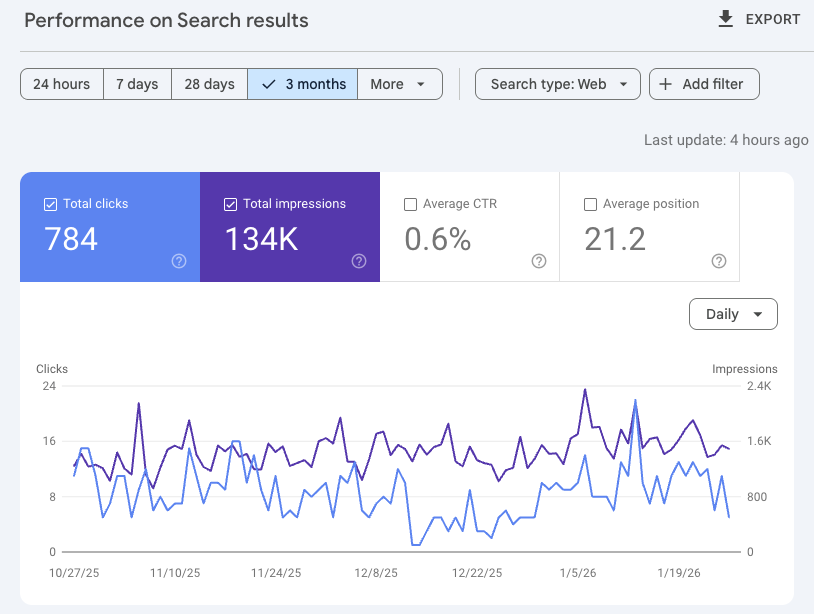
From the above image you see a dashboard where a user can easily get an idea of total clicks, total impressions, CTR, and spikes in traffic over time.
When you scroll down in the dashboard you start to get to the meat of the keyword data. Sort by impressions to get an idea of where your hot traffic keywords are.
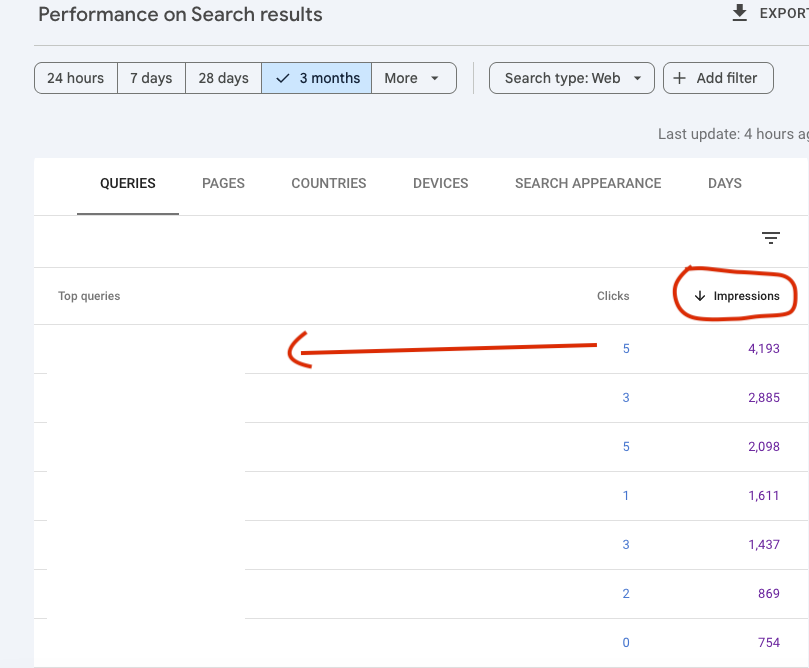
Actual KWs removed for privacy sake 😎
Understanding click through rate (CTR) and reviewing KWs that fall into that bucket helps to illustrate where keywords are ranking low, may not be relevant, pages that need fine-tuning, etc.
Just from a pure understanding of keyword-based search intent in search console you get a lot of good stuff that isn’t available elsewhere.
In addition to KW data, you can submit your site to be crawled, add and review site maps, and click a link to PageSpeed insights to check your site speed in desktop and mobile.
There are many other features to search console that are worth exploring, but for this post about keyword research it is suffice to just focus on these features. Make sure to sign up for search console, and add / verify your site, so Google can start collecting the data for you. In our experience it can take some time for the platform to get caught up on your KW data.
Google Ads
The way people use Google Ads is often wrong. Instead of giving Google money daily to pay for traffic, you can use the tool for a dozen days total, and get all the keyword data you can use for years to come.
This is the fastest way, in our experience, to procure actionable keyword data for a given industry.
The concept is simple, start a Google Ads search campaign – no display, performance max, or anything else, just go for a simple search campaign. Remove any campaign partner search engines and any other thing that would compromise pure search data. Make sure to locate your campaign in the country you are in and nowhere else. You may want to limit searches to a certain window of time for the day if your offering is something people ONLY look for at a given time. Narrow as much as you can.
Next build out a conversion metric on your website. Let’s say you sell insurance, and your goal is to get leads. You simply add a bit of code to your “thank you” page that a user reaches after filling out your quote form. This tells Google Ads that a click converted on your site.
More about setting up Google Ads conversions here.
Once you have set a Google Ads conversion campaign up, plan on running it for 10-12 days time. Create a specific keyword list of every imaginable keyword that would relate to your business, but make the keywords precise. Nothing loosey goosey like “insurance” or “home” but rather, terms like, “homeowners insurance north carolina, or home owners insurance texas.” Very succinct and precise, but broad in the sense of volume of keywords, way they are spelled, and so forth.
After a few days you’ll notice some keywords are too low in the bid range to impress, and others are too niche and haven’t received any user searches. This is all good to have. But the real gold is finding the keyword(s) that converts the most over a week or two.
And, finding the keywords that have the vast amount of impressions – even if people aren’t clicking on your ad. It’s good to know the traffic data for your industry keywords regardless of if your ad is attractive to them.
As you see this data, both in conversion, and also in impressions, that Google Ads will freely give you, there you will find a roadmap for the most valuable keywords to include in your content marketing.
Sure, you could get some false data in a given day or two, but over 12 days or so you will see a clear pattern emerge. One or two keyword phrases will seem to be the most active, and highest converting. I’ve seen it on hundred dollar campaigns and six figure campaigns as well.
Here’s a campaign we ran, where after short time we were able to drill down three metrics.
1- The campaign was in a very competitive and mature industry, and some keywords wouldn’t impress for lack of budget. We realized those were high comp keywords, and thus wouldn’t be good to chase after as a nascent biz. Instead we saw clear trends in conversion data, CTR, and conversion %. To the point it could have pivoted the entire business to show where the demand was located.
2. The impression data showed what people were searching for almost in real time – giving us an understanding of what demand was out there, and what words people were using.
3. Cost was such an issue, that the campaign itself ran just for a few weeks cost over 1k, and from then on we turned it off completely, having looked at that money as keyword research investment, much as ads.
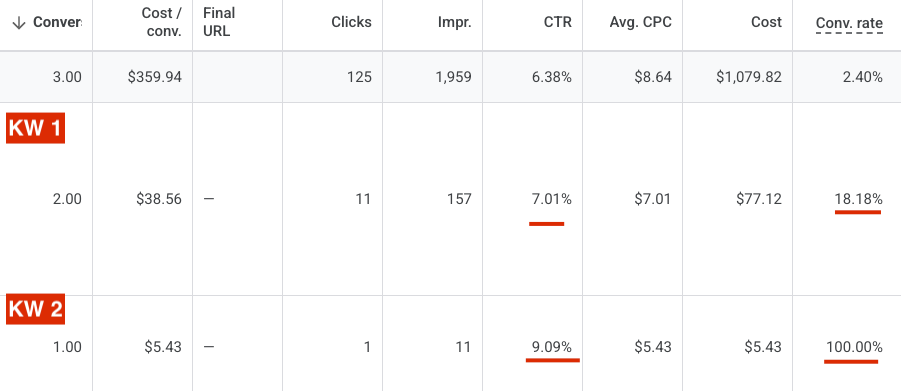
Was it worth 1k to get this data? Think about it, Google Ads gave our website real keyword-based traffic that sorted itself out from bounce, to quick click off the site, to question submitted, to conversion form filled out. In the experiment we see a pattern over 125 clicks that we would bet would hold true in 1,250 clicks, 12,500 clicks, 125,000 clicks. Maybe not at the exact rate, but fairly close.
This company dealt in the web design space, and the actual keyword data gave a view into a clear gap in the market. Our ads were impressing and converting the best in this gap area – that I can’t think of how we’d have discovered that gap otherwise. Think about it, there are web designers for lawyers, and doctors, and musicians, and on and on, how’d we know where we fit without this campaign?
In content marketing one could literally hang all their resources on these results. Just two keywords in total, and yet you could expect good rank, good results, and to save a ton of cash compared to buying share in Google Ads perpetually.
*You can do something similar in Microsoft Ads, though we often find the sample size a bit smaller there.
Google Ads Keyword Tool
As mentioned in our post on Q&A content marketing ideas, the Google Ads keyword tool is an excellent way to gain valuable insight into search volume, and ideas as to what people are searching.
Think of the above Google Ads campaign as a paid and percise way to drill down exceptional keyword targeting data, and Google Keyword Tool as the free more basic version. It’s still good, we still use it all the time, but it won’t tell you what will convert for you on your website like a paid live campaign will.
The idea that a website has a value proposition, and that a keyword is leading someone down a path to transact on that value proposition is kind of the whole point. So it’s good to get keyword ideas, and insights, and even estimates based on terms you submit, but not as good as running live campaigns.
Semantics
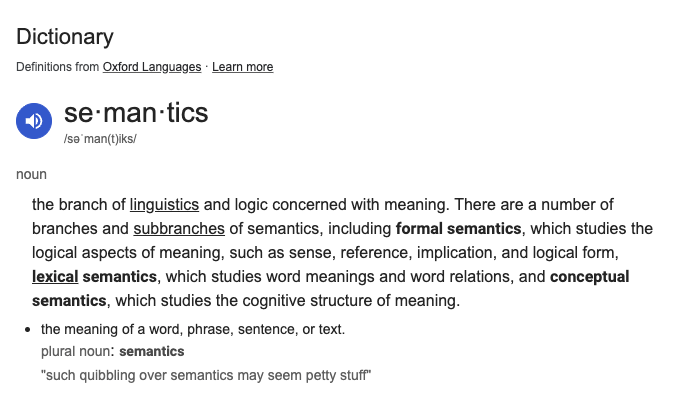
This probably is the most important aspect of keyword research, and fitting I guess we cover it last, because then maybe it becomes memorable. The way people speak to what you want to sell them.

Up north you buy sneakers. In the midwest they’ll call them tennis shoes. In the UK they might be called trainers. One pair of shoes, many different ways to describe them. This is semantics.
What people search when they are looking for what you want to sell them. A commercial realtor might think her jargon is perfect – nnn, triple net, etc., yet a deli owner might simply look for a store to rent.
One of the best way to get info on how people might search for what you have on offer is to talk to them. Sounds simple doesn’t it? Simply talk to a lot of people and listen for how they phrase what it is you have on offer.
Next look online at text written about what you do. Is your offering often misspelled, capitalized, or made into an acronym or shorthand of some kind?
Now think of your target audience, and how they specifically address what you want to sell. I have a pair of sweatpants I like, but my teenager might call them joggers. Am I selling to fortysomethings or teens? Use the keyword that matches the audience demographic you aim to reach.